
Our Mission

We strive to offer the SME market ONE innovative piece of software that will cater to their distinct business needs and provide them with long term profitable benefits; continually creating solutions for our customers, building relationships with them and earning their lifetime loyalty

http://www.beabetterbusiness.net/

http://www.beabetterbusiness.co.uk/

http://www.beabetterbusiness.ie/

http://www.youtube.com/user/IntelligentB1/

Showing posts with label "ERP". Show all posts

Thursday, September 9, 2010

Adopting ERP, “Best step for SMEs to increase productivity and ROI”


Nowadays, almost every organisation is using cutting edge ERP solutions to manage their business with ease.

Even, small businesses have started adopting custom made ERP solutions to handle their crucial business processes in a more professional manner.

As the government is making efforts to help UK SMEs expand and grow their businesses they will need the architecture to support such growth. Rather than having disparate systems integration will become key to increasing productivity and efficiency and creating true visibility across the organisation.

Small businesses constitute a major segment of overall business productivity. Adopting ERP is the best step that SMEs can take in order to increase their productivity and ROI. There are several operations at a small business enterprise that needs to be automated. In absence of proper ERP implementation, some of the key business operations like finance, inventory, human resource, purchase, or payroll need extra manpower and productive time.

SMEs are considered as major economic players and a potent source of national, regional and local economic growth (Taylor and Murphy 2004). Most small firms still under-utilise the potential value of IS innovations by only restricting them to administrative tasks Brock 2000). Enterprise systems (ES)provide Small to Medium-sized Enterprises(SMEs) with opportunities that are largely unexploited.

Friday, August 20, 2010

Cultural Change an upshot of SAP technical prowess


“We tend to think we can separate strategy from culture, but we fail to notice that in most organisations strategic thinking is deeply coloured by tacit assumptions about who they are and what their mission is.”
Edgar Schein

When enterprise resource planning software fails, it's usually because the company didn't dedicate enough time or money to training and managing culture-change issues.

"Faulty technology is often blamed, but eight out of nine times, ERP problems are performance-related," says Pat Begley, senior vice president of educational services at SAP, an ERP software company in Newtown Square, Pennsylvania.

When the technological problems are overcome by an SAP solution what happens to traditional processes and traditional behavior patterns and traditional organisational structures when those organisations suddenly have dramatically different views of what the world is likely to be like next week, next month, next quarter?

What happens when guesswork and catch up are no longer the norms?

What happens when all the people across the enterprise who should have access to these new insights gain that access?

Employees need appropriate training and a level of understanding so that they will support the ERP implementation and continue to support the use of the solution throughout its lifetime. Without employee commitment and dedication the solution is unlikely to become the backbone of the business and deliver on all the benefits of increased efficiency, productivity and reduced costs that they offer.

Early and constant communication is also critical to ease them through the transformation. Explain why you are implementing this tool and how it will make them more profitable or satisfied.

"End-users will want to know why they can't do it the old way," Begley says. "They need to know why the change was necessary and why management thinks it's important."

Your people are your main resource and core asset. They directly influence the value of any additional assets such as ERP software your company acquires or implements and are critical to strategic success.

Thursday, August 19, 2010

ERP Vs Accounting – What’s the difference?


Though ERP Systems have been around since the 1960s there still is a common misconception that ERP Systems and Accounting Systems are one in the same.

ERP Systems originally existed in the form of MRP systems and developed into what we know as ERP systems around 1990. Global ERP leader SAP technologies were established in the year 1972 by five engineers.

Paul Marketos, Managing Director of Bluekey Software Solutions, which specialises in implementing SAP Business One, says that while accounting is central to any business, it is not what differentiates it.

“Without integrated systems, accounting only offers after-the-fact reporting. But, there are so many factors other than what’s happened in the past influencing where your business stands today and where it will be tomorrow and in a month’s time."

“An accounting package cannot help you forecast demand for products, reduce stock handling, keep goods flowing or improve stock management. Nor will it allow you to set up business rules which prevent stock from being sold or shipped at the wrong price or to customers who owe you more than 90 days; or ensure that managers are alerted to operational exceptions.”

“Where an accounting system assists in tracking the finances to provide an overview of where the company stands from a financial perspective, based on historical data; ERP can be used to plan, control and streamline all aspects of business in real time, into the future."

“ERP integrates your key operational and customer-centric divisions, from production through to sales and service, enabling them to operate more efficiently. In fact, ERP is so effective in planning, integrating and controlling the business that good accounting is just one of the by-products of ERP,” says Marketos.
He believes that ERP is becoming a competitive necessity for companies of all sizes."

“Having made the shift from manual ledgers and Excel spreadsheets, companies that have automated their accounting processes are starting to realise that they need something bigger and better to improve efficiencies and profits because an accounting package simply cannot do it for them."

“The fact is that even with the best accounting package in play, that one source of the truth - that complete and accurate view of the business - remains elusive, and the only way to get it is with an integrated ERP solution."

“Many larger enterprises are also beginning to put pressure on their supply chain to implement ERP, not only to automate and speed-up administrative processes, but to streamline communication and other transactions as well,” says Marketos, adding that very often, the implementation of an ERP system leads to a complete re-engineering of many business processes, resulting in a leaner, meaner, faster and more profitable version of the business.

“With better inventory control, costing and operational efficiencies, ERP can actually help to drive profits, and so it quickly pays for itself,” says Marketos.

When the competitiveness, health and longevity of a business is at stake and the only way to increase profits is through improved efficiencies and cost cutting, the investment in ERP can be easily justified.
Friday, August 13, 2010

Top Ten ERP Trends for 2010


Are the trends ringing true?

Upgrade and footprint expansion activity
ERP decreased 24% in 2009 but it is expected to grow 8% per annum over the next 5 years. Based on the growth which SAP have achieved in 2010, 16% in Q2 the estimates may have been a little cautious.

Open Source
The use of Open Source Technology will continue to increase except for ERP Applications. A survey by Accenture also showed that nearly 40 percent of the 300 organisations queried planning to increase investment this year and they also planned to migrate critical operations to open source systems in the next 12 months.

Small businesses going to ERP sooner
Small Businesses will be moving to an enterprise level ERP system sooner. In 2005 the average company had at least 29 employees before adopting an ERP system; this number is expected to decrease to 18 in 2010.

Mobile ERP
Mobile ERP will grow in use and importance. With the emergence and popularity of the i-phone, i-store, and mobile applications, the next evolution in ERP will be a mobile client interface to ERP systems. SAP have merged with Sybase in order to more effectively meet the demand for mobile solutions; the wheels are in motion!

New enterprise resource functionality: energy utilisation
New enterprise resource functions going forward will require increased energy utilisation. That is there will be an even greater emphasis on ERP energy/carbon management systems. Energy management is the hot topic, driven by a pressure to meet targets and reduce taxes. Investment is being made in to energy utilisation functionality and the monitoring of it, however a survey carried out by Verdantix in the US enterprise carbon management isn’t yet an integrated business practice.

New-growth markets
New Growth Markets: Verticals. Forrester anticipates that of the seven major verticals the largest amount of ERP growth will occur in the Manufacturing sector even though the manufacturing industry is the third ranked industry in regards to overall ERP implementations.

Expanding ERP
The traditional ERP concept that we are familiar with was first introduced in 1992. Going forward traditional ERP systems will transform into what is being called EERM (External Enterprise Resource Management) which incorporates knowledge management information into your business process.

Diligent focus on ERP benefits realisation and ROI
Long gone are the days of spending like it's 1999 and hoping for the best. CIOs and COOs will continue to face pressure to prove that every dime of investment in ERP systems is justified and generates a solid return on investment.

The companies that choose the right software for their organisations, best manage business and organizational risk, implement effectively, and position themselves for benefits realisation will be better positioned headed into the recovery. This will require companies to more effectively assess vendor viability during their ERP selection processes and leverage ERP implementation best practices more than they have in the past.

Monday, August 9, 2010

Maximise your ERP Solution by Measuring ROI


According to a report issued by the Aberdeen Group ROI of ERP Software is gaining increasing attention from SMEs of have implemented solutions. The focus has shifted since a survey they carried out at the beginning of 2007 when 32% of companies never estimated ROI to justify ERP projects and 33% never measured the actual return on those investments.

The top strategic actions which are of importance in achieving optimum ROI and the full benefits from ERP are seen to be standardising and accelerating business processes, and providing visibility to business processes across functions and departments.

While many companies now feel compelled to make an investment in ERP as a necessary infrastructure to support their business, best practices for maximising the benefits from such a solution involve the measurement of the reduction in costs, improvement in schedule performance and customer satisfaction, and the ability to redeploy employees to add more value to the organisation.

Best in Class companies are 33% more likely to utilise ROI estimates to justify ERP projects than Laggards and 71% more likely to measure the results when completed. While 100% of Best in Class companies use ROI estimates to justify ERP projects costs, they do not all come under the same level of scrutiny.

Replacement activity was cited as requiring the most scrutiny as an existing ERP solution is presumably already bringing value to the enterprise, while a new purchase will be most likely replacing a need that has not been previously satisfied.

The most regularly suggested reason for not measuring ROI is that it is too
difficult to measure. The most successful ERP implementations have clear objectives which should be easily quantified and measured so that full gains can be realised.
24% of SMEs point to a lack of tools to measure ROI, however, most if not all of the tools are available within the application for which the ROI is being measured.

While ERP plays a supporting role in creating and expanding sales channels and in developing strategic partnerships, it is essential to enabling improved business execution, the top strategy in aggregate across companies of all sizes.

Thursday, July 29, 2010

SAP growth a tribute to smart business investment


SAP has reported 16% growth in software and software related service revenues for the Second Quarter as it reaches the 100,000 customer milestone.

ERP investment hasn’t diminished in spite of the recession, their evidently has been an upsurge.

A Forrester Research survey carried out in the fourth quarter of 2008 that just 1% of Enterprise Software Decision Makers were planning to decrease their ERP investment.
This was during the heat of the recession when businesses were really feeling the pinch. Evidently there was and continues to be an increased awareness of the benefits of ERP Software in all circumstances but particularly when companies want to reduce costs and improve efficiency.

SMBs are now getting back into the ERP software market in light of the recovering economy. They are looking for software to automate their operations and scale for growth.

SAP were perceptive and as a result have benefited from the upsurge in SME ERP investment having focused a substantial amount of investment in their SME solutions which they continue to remain committed to.

“Our focus on customer-driven innovation is positively impacting our growth. Reaching more than 100,000 customers is a testament to the inroads we have made in expanding our volume business and our success in the small and midsized enterprise (SME) segment,” said Jim Hagemann Snabe, Co-CEO of SAP.

“Our success in the SME segment creates a strong foundation for the new version of our on-demand platform SAP Business ByDesign. The new version will be available on time on July 31st and is ready for volume deployment in six countries.”

Though the conventional response during a recession may be to curb ERP investment, businesses are evidently becoming aware that investing now will put them in a better position in the future!

To view the Top 10 benefits and results of implementing ERP in the current economic environment:
http://it.toolbox.com/blogs/erp-roi/ten-reasons-to-implement-erp-during-the-economic-downturn-29577

Wednesday, July 14, 2010

SAP: Shaping the future with an investment in business and staff!

Despite rising in popularity with UK organisations, it is apparent that many companies are unaware of the real benefits of SAP software. ERP systems in general are still viewed by some as confusing, technical structures which have no real place in a business, particularly small businesses.
ERP, Enterprise Resource Planning, is principally an integration of business management practices and modern technology.
ERP is an amalgamation of the three most important components; Business Management Practices, Information Technology and Specific Business Objectives.

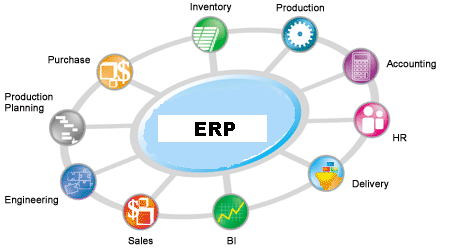
The key objective of an ERP system is to integrate information and processes from all functional divisions of an organisation and merge it for effortless access and structured workflow. The integration is typically accomplished by constructing a single database repository that communicates with multiple software applications providing different divisions of an organisation with various business statistics and information.
Deploying a comprehensive ERP system across an organisation leads to performance increase, workflow synchronisation, standardised information exchange formats, complete overview of the enterprise functioning, global decision optimisation, speed enhancement and much more.
SAP has drawn upon 35 years experience of developing business management software and created SAP Business One exclusively to meet the changing and industry specific needs of small businesses.
Unlike many other small business solutions on the market today, SAP Business One is a single application, eliminating the need for separate installations and complex integration of multiple modules.

To get an insight into more the benefits of SAP Business One visit:
http://it.toolbox.com/blogs/sap-sector/sap-shaping-the-future-39583

Our get in touch with us!

Our Website: www.beabetterbusiness.net
Contact Us: info@iisystems.net